

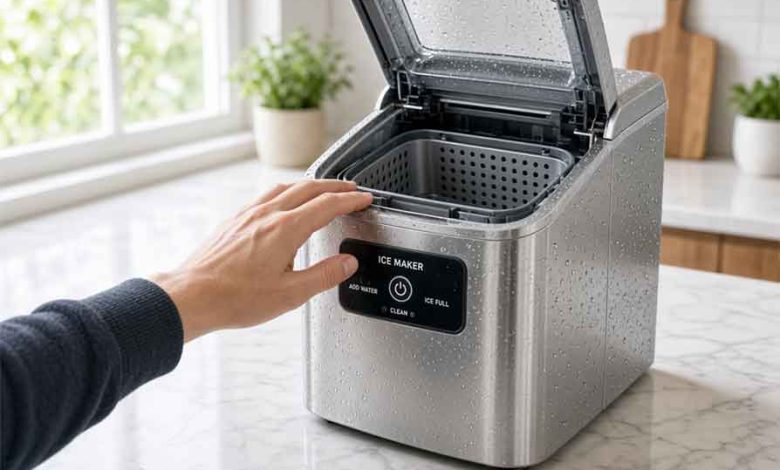
An ice maker often goes unnoticed until the bin is empty, ice production slows, or water starts leaking into the freezer. These problems may point to a blocked water line, incorrect temperature, or worn components. Finding the cause early can limit damage and avoid costly repairs.
Common Reasons an Ice Maker Stops Working
An ice maker repair needs enough water, a cold freezer, and working internal parts. When something goes wrong, it may produce fewer cubes or stop completely.
Possible causes include:
- Blocked water line. A kinked or frozen hose restricts water flow.
- Clogged water filter. Poor water flow can leave cubes small, misshapen, or missing.
- Faulty inlet valve. A damaged valve may stop water entering the tray or allow it to flow continuously.
- Incorrect freezer temperature. Warm air, poor circulation, or frequent door opening can slow production.
- Damaged mechanical parts. Worn motors, broken gears, or jammed ejectors can prevent ice from dropping into the bin.
- Sensor or control failure. A faulty sensor may register a full bin incorrectly, while a damaged control board can interrupt production.
Sometimes, frozen cubes simply jam the mechanism, or the bin sits incorrectly. Neither problem necessarily calls for a new ice maker.
Simple Troubleshooting Steps Homeowners Can Try
Before replacing parts, check a few things. Many ice maker problems have straightforward causes that homeowners can identify safely:
- Check the water line. Make sure the shutoff valve is open and the tubing has no visible bends or leaks.
- Replace the filter. Follow the manufacturer’s replacement schedule and use a compatible cartridge.
- Measure the freezer temperature. A separate thermometer can show whether the compartment stays cold enough.
- Inspect the ice bin. Remove stuck cubes and check for ice blocking the ejector mechanism. Never force the moving parts.
- Check the settings. Confirm that the ice maker is switched on and its shutoff arm moves freely.
- Look for excess frost. Ice around the fill tube may point to a water supply or valve problem.
After changing a filter or adjusting the temperature, allow time for ice production to return. The refrigerator manual should explain how long a normal cycle takes.
If water reaches electrical components, stop troubleshooting and disconnect the appliance when safe.
When Ice Maker Repair Requires a Professional
If the ice maker still fails after these checks, the fault may be inside the unit. Professional ice maker repair may be needed when:
- The tray stays empty despite normal water flow.
- Water overflows or keeps entering the unit.
- The motor grinds or clicks repeatedly.
- Ice production stops without an obvious reason.
- Error codes or electrical faults appear.
- Ice output drops as freezer temperatures fluctuate.
A technician can examine the inlet valve, wiring, sensors, and control board. Depending on the design, the motor, mold heater, thermostat, or ejector assembly may also need testing.
Electrical repairs require care, and poorly fitted water connections can leak. If the refrigerator cannot maintain its temperature, the problem may lie elsewhere in the appliance. Testing the affected parts helps avoid replacing components that still work.
Repair or Replace: Which Makes More Sense?
Replacing an entire refrigerator because the ice maker has failed rarely makes sense when everything else works properly. Still, some repairs cost more than the appliance is worth.
Repair is usually worth considering when:
- The refrigerator maintains the correct temperature.
- Only the valve, sensor, motor, or ice maker assembly needs replacement.
- Compatible parts are available.
- The repair estimate is reasonable compared with replacement.
Replacement may be more practical when:
- The refrigerator has several recurring faults.
- Important parts are discontinued.
- Cooling problems persist after previous repairs.
- Repair costs approach the price of another refrigerator.
The appliance’s age matters, but its condition tells more of the story. An older refrigerator with a minor valve fault may still have years of use ahead. A newer unit with expensive cooling-system damage presents a different decision.
Before spending money, compare the repair estimate with the refrigerator’s condition, parts availability, and any remaining warranty coverage.
Ice production can fail because of restricted water flow, unsuitable freezer temperatures, or damaged parts. Start with the filter, supply line, controls, and ice bin. If those checks reveal nothing, professional ice maker repair can locate the fault and establish whether fixing it makes financial sense.