
Most homeowners treat drafts and hot spots as separate problems with separate fixes. They’re not. Both are symptoms of the same root cause – a broken thermal envelope that lets outdoor air dictate indoor conditions.
Understanding The Stack Effect
Your house functions as a living organism. Warm air rises, builds pressure near the ceiling and attic floor, and escapes through any openings it can find. That creates negative pressure at the base of the house, pulling cold outside air in. This natural phenomenon is known as the stack effect, and it puts a strain on your heating and cooling systems. The stack effect is stronger in winter when the temperature difference between indoor and outdoor is greater. It’s like having an open window at the top and the bottom of your house.
Drafts vs. Hot Spots – They’re Not The Same Problem
A draft is when outside air comes into your home through a crack or gap, and you feel that movement of air. A hot spot is different. Here, the spot on your wall or ceiling is warmer than the rest of the wall or ceiling. This is caused by heat traveling directly through an area with less insulation. In either case, you feel uncomfortable in your home and you just want it fixed.
But do you ask for draft-proofing or insulation? And what’s the difference in how these two problems are located and fixed?
Drafts require sealing. Hot spots require insulating. Most houses need both. Fixes that address only one problem usually don’t do the job.
How To Find Hidden Air Leaks Yourself
You can easily spot most air leaks without professional equipment. A small airstream is usually enough to feel those leaks. But first, perform a simple visual inspection that concentrates on areas known to be weak points for air leaks. Then take the following steps:
- Use your hand. Hold your hand close to windows, doors, electrical outlets, plumbing fixtures, electrical boxes, ceiling fixtures, the attic hatch, and other openings to the outside. If your hand feels a draft, there’s likely an air leak. Just be sure to watch out for moving parts during the inspection.
- Light a stick of incense. On a windy day, light a stick of incense and pass it slowly around windows, doors, and other openings to the outside while watching the smoke. If the smoke wavers, there’s most likely a draft. To doublecheck heating and cooling system ducts, hold the stick near duct connections and look for movement of the smoke.
- Be a detective. Look for dust and cobwebs, which are highlighted in the beam of a bright flashlight, as they are likely to accumulate where leaks are located. Also, try searching areas around doors, windows, and other openings, as the shifting air can cause the materials in your walls to vibrate, making those leaks easier to find.
The Case For Spray Foam As A Permanent Fix
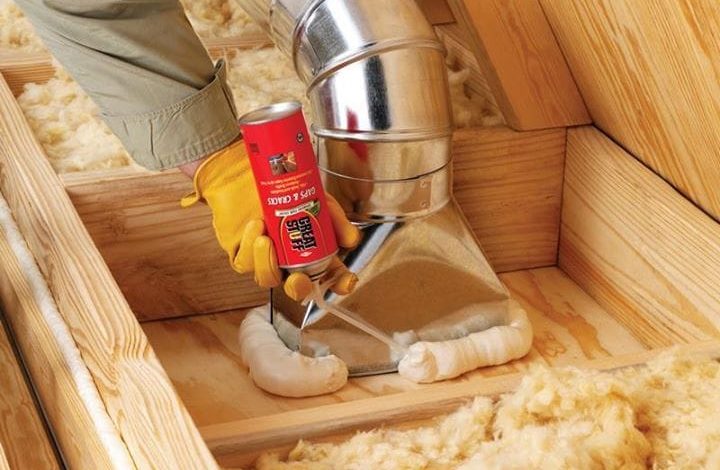
Polyurethane foam solves the air and conduction problem at the same time. It expands on contact to fill irregular gaps, voids around wiring and plumbing, and the spaces batts always miss. Once cured, it’s both a thermal barrier and an airtight seal – two jobs done by one material.
For homeowners in climates with extreme seasonal swings, this matters more than in moderate regions. The Spray Foam Insulation Phoenix professionals install addresses both convective and conductive heat loss simultaneously, which is exactly what’s needed when summer temperatures put constant pressure on the building envelope for months at a time.
Homeowners can save an average of 15% on heating and cooling costs by air sealing and adding insulation in attics, crawl spaces, and basement rim joists (U.S. Environmental Protection Agency). In practice, the mechanical benefit often matters as much as the energy bill – an HVAC system that isn’t short-cycling lasts significantly longer.
Why Fiberglass Batts Fall Short
Fiberglass batt insulation may seem to have a good R-value when we look at the product data sheet. But with real-life installation, fiberglass batts are not effective at insulating. They sag over time and leave gaps at the top of wall cavities, and they are permeable to air so they don’t prevent air leaks. This allows cold or hot air to easily pass between tiny gaps in the insulation, making it much less effective and reducing its real-world R-value.
Sealing The Envelope From The Right Locations
The most important areas to insulate with spray foam are the attic floor, crawlspace rim joists, and any unconditioned space directly adjacent to conditioned living space (such as a vented attic or crawlspace).
The attic and crawlspace rim joists form the largest surface area of your heat envelope. It’s here that the stack effect of rising heat most easily sucks conditioned air from your living space to the outside. This is why insulating these areas is the most cost-effective step you can take to improve the energy efficiency and comfort of your entire home.
With access to your attic and crawlspace, these areas can almost always be thoroughly air-sealed and insulated in a single day. Get the envelope right, and the rest of the house tends to follow.