

The kitchen is universally recognized as the engine room of the household. It is a highly active space where complex tasks occur daily, ranging from precise knife work and recipe reading to measuring ingredients and managing high-temperature cooking surfaces. Despite its intense operational demands, the kitchen is frequently one of the most poorly lit rooms in a residential home. Many properties rely on a single, centralized overhead light fixture that casts deep shadows exactly where illumination is needed most: on the countertops, sinks, and cooking ranges.
Improving kitchen lighting for better visibility requires looking past simple aesthetics. It demands a systematic, layered approach that addresses human ergonomics, light color temperature, and fixture placement. By understanding how to manage shadows and eliminate glare, you can transform your kitchen into a highly efficient, safe, and visually comfortable workspace.
The Foundation of Layered Lighting Design
A successful lighting configuration in a work-intensive space must never rely on a single light source. Achieving optimal visibility requires implementing a layered lighting design strategy. This architectural approach separates lighting into three distinct functional categories: ambient, task, and accent lighting. Each layer serves a specific purpose, and when operated together, they eliminate dark corners and create a balanced environment.
Ambient Lighting: Managing the Baseline Glow
Ambient lighting represents the foundational layer of light that fills the entire room. It provides general illumination, allowing you to move through the kitchen safely without bumping into islands or open cabinetry doors.
The most efficient way to establish ambient light in a modern kitchen is through a network of recessed ceiling canisters, commonly referred to as pot lights. These fixtures sit flush with the drywall ceiling, preserving precious headroom and maintaining clean architectural lines. To prevent harsh shadows, space recessed lights evenly across the ceiling, keeping them roughly three to four feet away from each wall and four to five feet apart from one another.
Task Lighting: Illuminating the Work Zones
While ambient light handles the overall room volume, task lighting is the most critical element for improving actual work visibility. Task lighting delivers focused, high-intensity illumination directly to specific areas where manual work takes place, such as prep counters, cooktops, and sinks.
Without dedicated task lighting, your body will naturally block the overhead ambient light when you lean forward to chop vegetables or wash dishes, casting a shadow directly over your hands. Proper task fixtures must be positioned between your head and the work surface, ensuring the light path remains unobstructed.
Accent Lighting: Enhancing Depth and Dimension
Accent lighting is a secondary layer that adds visual depth and stylistic flair to the kitchen. While it does not directly illuminate chopping boards, it eliminates the heavy shadows underneath cabinets and above architectural features, making the entire room feel larger and more open. Examples of accent fixtures include interior cabinet lighting for glass-front doors, toe-kick lighting along the base of lower cabinets, and uplighting positioned on top of upper cabinetry.
Upgrading Countertop Visibility with Under-Cabinet Fixtures
The countertops tucked beneath upper cabinets are the most common areas for food preparation, yet they are also the most prone to darkness. Installing under-cabinet task lighting is one of the fastest and most impactful ways to increase kitchen functionality.
LED Linear Tape Lights versus Puck Lights
When choosing under-cabinet fixtures, homeowners typically select between linear LED tape lighting or individual puck lights.
-
Linear LED Tape Lighting: This is the preferred choice for modern task lighting. Flexible LED strips run continuously along the entire length of the upper cabinetry, providing an even, seamless wash of light across the countertop without creating any dark gaps or hot spots.
-
LED Puck Lights: These round, directional fixtures are spaced several inches apart. While they create beautiful, dramatic cones of light on the backsplash, they can result in uneven visibility, alternating between highly bright spots and dark shadows along the prep surface.
Correct Placement Mechanics
To maximize visibility and eliminate uncomfortable glare, mount under-cabinet lights near the front lip of the upper cabinet underside, rather than pushing them back against the wall. Positioned at the front, the light shines downward and slightly backward onto the center of the countertop. Additionally, ensure the cabinetry features a small decorative trim or valance along the lower front edge to shield the raw light bulbs from your direct line of sight when you are seated nearby.
Illuminating Kitchen Islands and Sinks
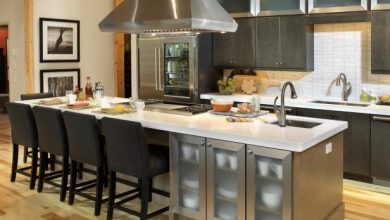
Kitchen islands have evolved into multi-functional zones used for meal prep, casual dining, homework, and entertaining. Sinks require dedicated focus to ensure cleanliness during dishwashing and food rinsing.
Pendant Configuration Over Islands
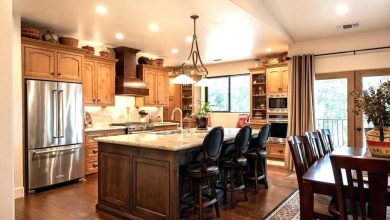
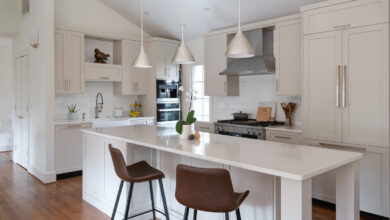
Pendant lights are excellent tools for anchoring a kitchen island visually while delivering strong downward task lighting. To optimize visibility without obstructing conversation across the island, hang pendant lights so the bottom of the fixtures sits roughly thirty to thirty-six inches above the countertop surface.
When spacing multiple pendants, maintain a distance of approximately twenty-four to thirty inches between each fixture. For islands with highly reflective surfaces like polished quartz or marble, opt for pendant fixtures that utilize frosted glass or fabric shades. These materials diffuse the light softly, preventing blinding mirror-like reflections from bouncing off the countertop into your eyes.
Dedicated Sink Lighting
The kitchen sink area demands its own independent light source. If your sink is positioned beneath a window, install a directional recessed spotlight or an elegant wall sconce directly above the center of the basin. This ensures that when you stand at the sink to inspect glassware or clean vegetables, the light shines directly into the basin rather than hitting the back of your head.
Calibrating Color Temperature and Bulb Performance
Even the most expensive, perfectly positioned lighting fixtures will fail to improve visibility if you select the wrong light bulbs. Light performance is governed by two critical metrics: color temperature and the Color Rendering Index.
The Importance of Color Temperature
Color temperature is measured in Kelvin and dictates whether a light bulb appears warm and yellowish or cool and bluish.
-
Warm White (2700K – 3000K): This temperature creates a cozy, relaxing environment suitable for living rooms and bedrooms, but it can make a kitchen feel dim and introduce an artificial yellow tint to fresh food items.
-
Bright Neutral White (3500K – 4000K): This is the ideal spectrum for kitchen functionality. Neutral white light mimics natural daylight, instantly making the room feel crisp, alert, and clean. It significantly improves reading visibility on recipes and packaging without looking overly clinical.
-
Cool Daylight (5000K+): This high-Kelvin light appears stark blue. It should be avoided in residential kitchens, as it can create a cold, institutional atmosphere and cause optical strain over extended periods.
Maximizing the Color Rendering Index
The Color Rendering Index, or CRI, measures how accurately a light source reveals the true colors of physical objects compared to natural sunlight. The index scales from one to one hundred.
For a kitchen environment, always select LED bulbs with a CRI rating of ninety or higher. A high CRI ensures that you can accurately judge the freshness of meats, detect subtle color changes in simmering sauces, and spot blemishes on fruits and vegetables, preventing culinary mistakes caused by distorted color perception.
Smart Switching and Dimmable Control Systems
True kitchen lighting flexibility requires the ability to adjust light levels based on the time of day and the specific activity taking place. Running all kitchen lights on a single on-off toggle switch reduces utility and comfort.
Zoning and Independent Switches
Divide your kitchen lighting network into independent electrical circuits. Your ambient recessed lights, under-cabinet tape lights, island pendants, and accent lights should each operate on their own separate switches. This zoning allows you to turn on high-intensity under-cabinet task lights when preparing a complex meal, and then transition to soft island pendant lighting when sitting down to dine, keeping the messy prep areas hidden in low light.
Integrating Electronic Dimmers
Every single lighting circuit in a contemporary kitchen should be paired with a compatible electronic dimmer switch. Dimmable switches allow you to crank up the brightness to one hundred percent during heavy morning cleaning and meal prep, and then lower the intensity to twenty percent in the late evening, transforming the kitchen into a soft, inviting space for midnight snack runs without shocking your circadian rhythm.
Frequently Asked Questions
How can I improve lighting in a kitchen without drilling into the ceiling for new wiring?
If you cannot add hardwired fixtures due to budget constraints or rental lease agreements, utilize plug-in and battery-operated alternatives. High-quality, rechargeable LED tape lights can be attached beneath upper cabinets using heavy-duty adhesive strips, providing excellent task lighting without any drywall damage. You can also swap out standard light bulbs in your existing fixtures for smart LED bulbs, allowing you to control brightness and color temperature directly through a smartphone application.
What are the consequences of placing recessed ceiling lights too close to the upper cabinets?
If recessed ceiling lights are placed too close to the face of your upper cabinets, the cabinetry boxes will physically block the downward path of the light. This results in an unwanted visual effect known as light washing, where the top tops of the cabinets are intensely bright while the actual countertops beneath them remain completely dark and shrouded in heavy shadows.
How do I prevent dark corners in a kitchen that features open shelving instead of upper cabinets?
Kitchens with open shelving instead of traditional wall cabinets lack a front lip to hide linear tape lighting. To resolve this, you can install small, decorative wall sconces with adjustable articulating arms directly above each shelf level. This layout allows you to angle the light downward onto the prep surfaces while highlighting your displayed dinnerware as an accent feature.
Are track lighting systems still appropriate for modern kitchen designs?
Yes, modern track lighting systems offer incredible versatility, especially for remodeling projects where adding multiple recessed ceiling holes is impractical. Modern tracks are incredibly sleek and minimal compared to the bulky designs of past decades. They allow you to slide, adjust, and aim individual spotlight heads toward specific task areas like the stove, sink, and island from a single electrical ceiling box.
How does the finish of my kitchen countertops affect my lighting choices?
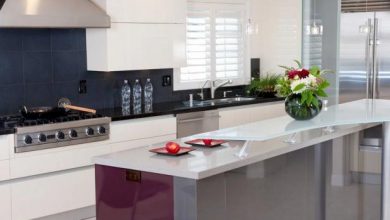
The sheen of your countertops dictates how light reflects into your eyes. High-gloss finishes like polished granite, glossy tile, or polished quartz act like mirrors, reflecting raw light bulbs upward and causing uncomfortable glare points. If you have glossy counters, prioritize diffused light sources, such as frosted bulbs or linear tape lights with aluminum channels and milky diffusers, to soften the glare. Matte or honed countertops absorb light smoothly, making them much easier to illuminate evenly.
What is the minimum recommended wattage or lumen output for kitchen task lighting?
When evaluating modern LED fixtures, focus on lumens rather than wattage, as lumens measure actual light output. For general ambient kitchen lighting, aim for roughly thirty to forty lumens per square foot of floor space. For dedicated task lighting zones, such as directly over the countertops or sink basin, increase the intensity to seventy to eighty lumens per square foot to guarantee crisp, strain-free visibility.